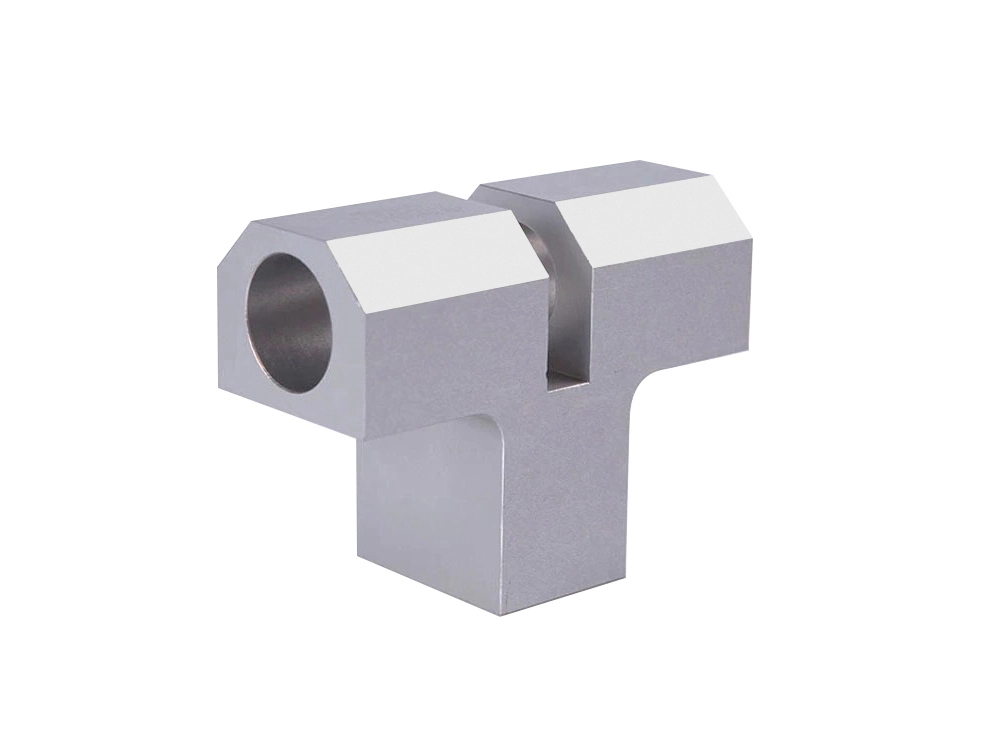
Copper, Brass, Aluminum & Steel: Property Comparison Table
| Property | Copper (C11000) | Brass (C36000) | Aluminum (6061-T6) | Steel (1045) |
|---|---|---|---|---|
| Hardness (Brinell, HB) | 50 – 85 | 70 – 80 | 95 | 163 – 200 |
| Density (g/cm³) | 8.89 | 8.50 | 2.70 | 7.85 |
| Electrical Conductivity (%IACS) | 100% | 28% | 40% – 43% | 8% – 10% |
| Thermal Conductivity (W/m·K) | 388 | 115 | 167 | 50 |
| Typical Applications | Electrical connectors, heat sinks | Fittings, valve bodies, gears | Structural parts, housings | High-strength structural components |
Data based on standard alloy reference values for C11000 (ETP copper), C36000 (free-cutting brass), 6061-T6 aluminum, and 1045 carbon steel.
Pure copper (C11000) serves as the 100% IACS benchmark for electrical conductivity — every other material in this table is measured relative to it. Brass (C36000) contains added lead to improve machinability, which comes at the cost of significantly lower conductivity and thermal performance compared to pure copper. Aluminum 6061-T6 offers a hardness close to brass but at roughly one-third the density of steel, making it the default choice for lightweight structural parts. Steel 1045, meanwhile, delivers the highest hardness and strength of the four but trails far behind in both electrical and thermal conductivity.
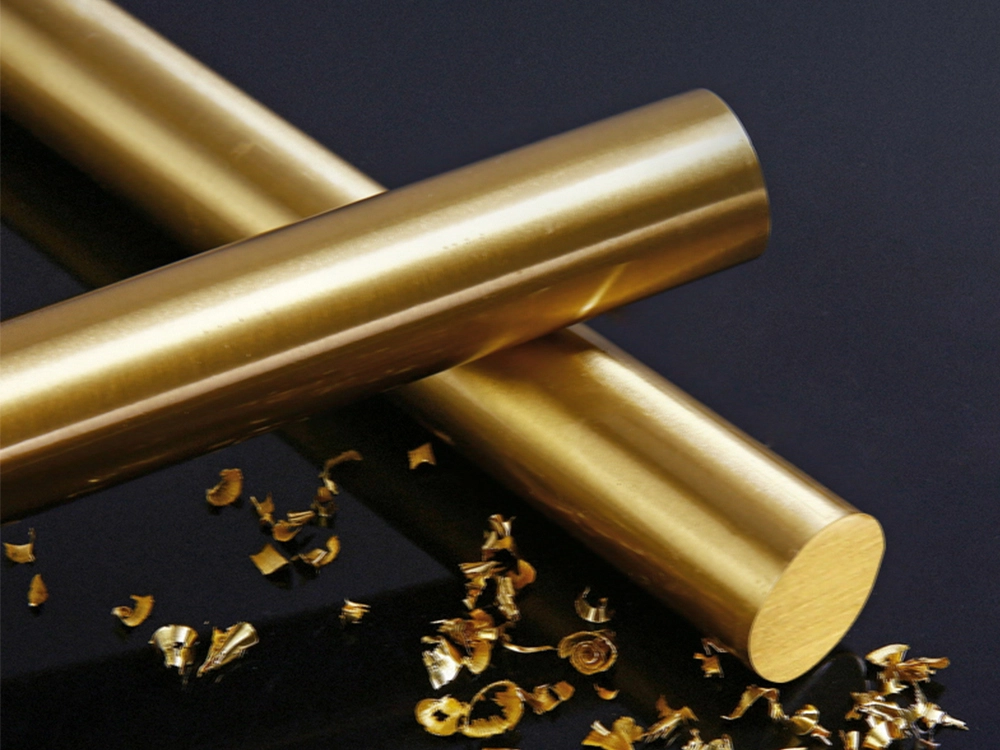
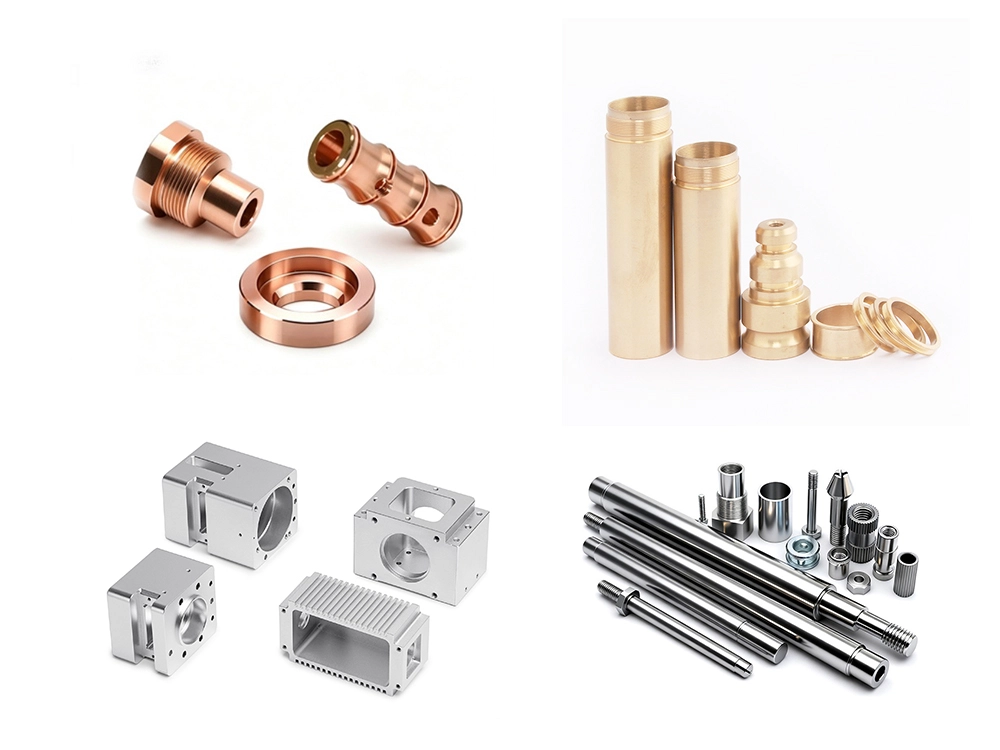
Where Each Property Matters: Application Scenarios
Electrically Conductive Structural Parts
The challenge: Components like busbars, connectors, and terminal blocks need to carry current with minimal resistance loss. In these applications, conductivity is the priority — engineers can often accept a softer, less wear-resistant material because the part isn’t under heavy mechanical load.
The approach: Oxygen-free copper (C10100/C10200) or high-conductivity copper alloys are typically specified.For applications like busbar and connector manufacturing, switching from a copper-alloy substitute to OFC (oxygen-free copper) improved conductivity by roughly 250%, while keeping machining costs manageable through optimized tool paths for copper’s gummier cutting behavior.
The challenge: Heat sinks, cold plates, and thermal management parts need to move heat away from a source quickly. Here, copper’s high thermal conductivity outweighs its comparatively lower strength — but designers still need enough structural integrity to survive assembly and handling.
The approach: Copper alloys with slightly higher hardness (e.g., C14500 tellurium copper) are often used to balance machinability and thermal performance. Fin geometries and wall thicknesses are adjusted during CNC programming to compensate for copper’s lower stiffness compared to aluminum.
Heat-Dissipating Components
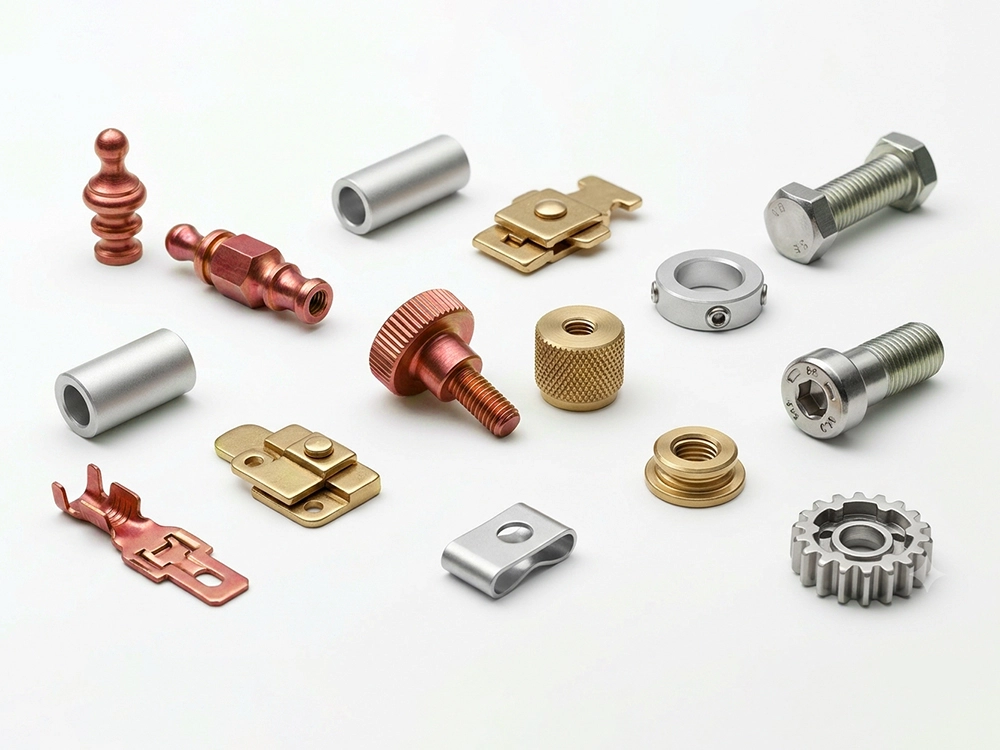
Precision Small Parts (Weight-Critical Applications)
The challenge: Some components — counterweights, precision connectors, small electrical contacts — actually benefit from copper’s higher density relative to aluminum. When a part needs mass within a small footprint (e.g., balancing weights or high-density electrical contacts), density becomes an advantage rather than a drawback.
The approach: Copper or copper-alloy stock is selected specifically for its mass-to-volume ratio, with tight tolerance machining to keep weight distribution consistent across production batches.